
The Conditions of Healing
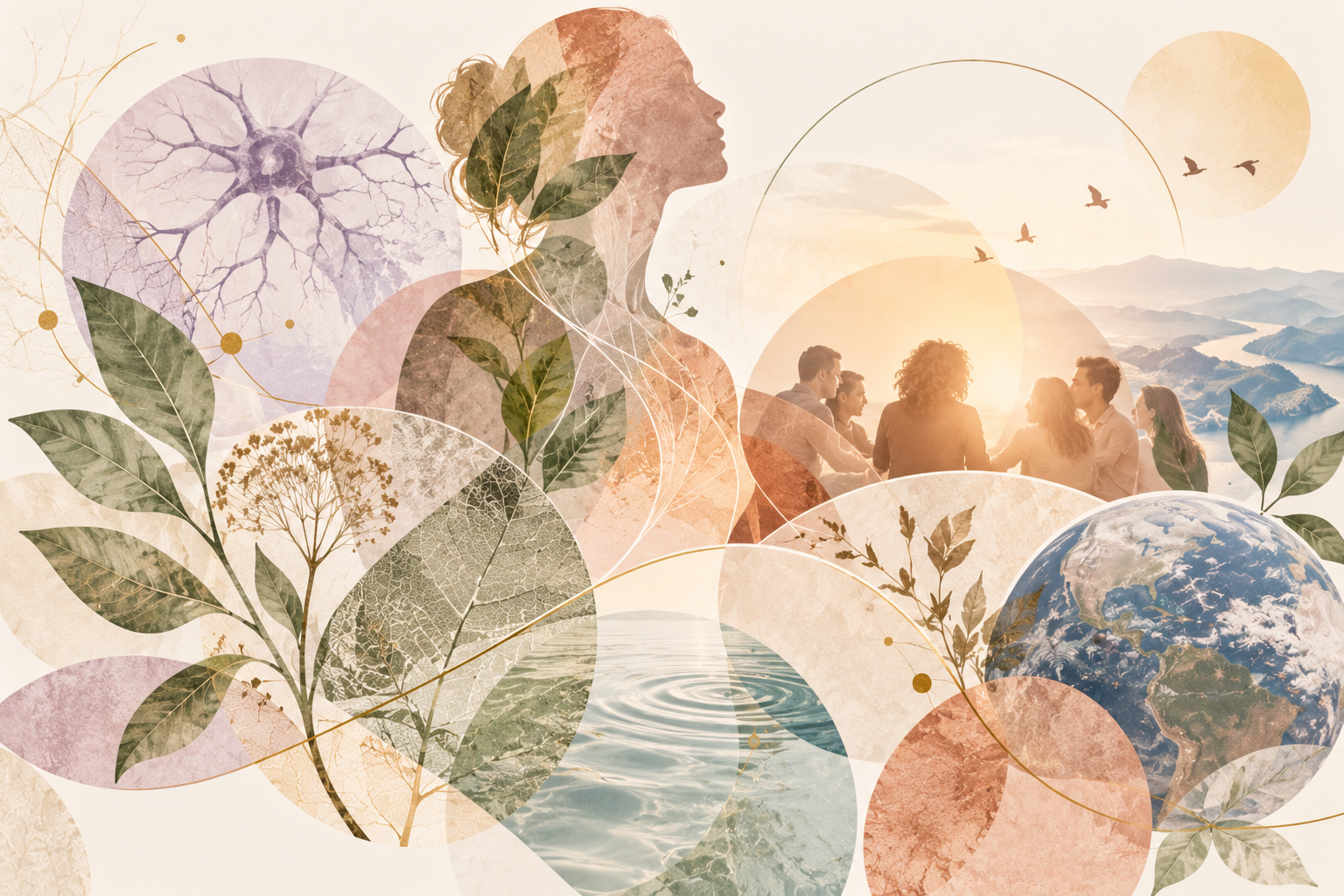
What becomes possible when we begin to understand healing not simply as something we do, but as something that emerges through the conditions we create?
For more than three decades, my work in the healing arts has been an ongoing exploration of the human body, our inner experiences, and the many ways we move toward healing and wholeness.
Like many practitioners, I began with a focus on methods and techniques. I wanted to understand how the body works, how to relieve discomfort, how to support balance, and how to help people feel better.
Over time, however, my curiosity began to shift.
I became increasingly interested not only in what we do to support healing, but in what makes healing possible in the first place.
Why does someone feel more at ease in one environment and guarded in another? Why can a simple moment of being genuinely heard bring a sense of relief? What happens when someone begins to feel safe enough to notice what they have been holding, protecting, or avoiding?
These questions have gradually changed the way I understand healing.
They have also led me toward what I call the Ecology of Healing.
Healing Is More Than an Intervention
We often approach healing by looking for something that needs to be corrected, treated, or changed.
And certainly, treatments and interventions have an important place. Medical care, therapeutic approaches, movement, nutrition, and many other forms of support can make a meaningful difference in people's lives.
But healing involves more than the intervention itself.
It also takes place within the conditions of a person's life—their relationships, beliefs, emotional experiences, physical environment, biological processes, and access to support.
A person may understand what is contributing to their stress yet struggle to change familiar responses. Someone may recognize an emotional pattern but continue experiencing it in their body. Another may find temporary relief through an intervention, only to return to an environment that continues to create strain.
This invites us to consider a broader question:
Are we paying enough attention to the conditions in which healing is being asked to happen?
The Body Is Part of the Conversation
One of the most meaningful lessons in my years of working with people has been learning to listen to the body—not only as a physical structure, but as a living system responding continuously to experience.
Our physiology does not operate separately from our lives.
Stress, rest, relationships, perceived safety, sleep, nourishment, and environmental conditions can all influence how our bodies function.
Our nervous systems constantly participate in responding to what is happening within us and around us.
Sometimes what we experience as tension, withdrawal, vigilance, or difficulty relaxing may reflect protective responses that have developed through experience.
Rather than immediately viewing these responses as something wrong, we can become curious about what they may be communicating.
What is this person experiencing? What has their system learned to anticipate? What might help create greater support, flexibility, and choice?
This does not mean that every physical symptom has an emotional explanation. Our bodies are complex, and illness, pain, and other health concerns deserve appropriate medical assessment and care.
It does mean that our lived experiences and biological processes are interconnected, and both deserve our attention.
The Healing Potential of Relationship
Another dimension that continues to fascinate me is the relational nature of healing.
We are shaped through relationships from the beginning of life.
Our experiences of connection, separation, belonging, conflict, care, and recognition contribute to how we experience ourselves and the world.
In my work, I have witnessed how meaningful it can be when someone feels genuinely listened to without being judged, rushed, analyzed, or told what to do.
Sometimes what is needed is not another interpretation or solution, but an opportunity to experience what is present in the company of someone who can remain attentive, grounded, and open.
There can be something profoundly supportive about being met in this way.
This is one reason I have become increasingly interested in relational presence, group experiences, and the conditions that allow people to feel connected while remaining authentic to themselves.
We do not need to fix one another to contribute to an environment that supports healing.
We can listen. We can become aware of our own reactions. We can make room for different experiences. We can develop the capacity to stay in relationship even when things feel uncertain or uncomfortable.
These are not small capacities. They influence how we meet ourselves and one another.
Healing Within a Larger Living System
When we begin to look at healing through an ecological perspective, our attention expands beyond the individual.
In nature, no living organism exists independently of its environment.
A tree is connected to the soil, water, sunlight, microorganisms, and the larger ecosystem that supports its life.
Human beings are also part of interconnected systems.
Our biology is influenced by the conditions in which we live. Our relationships shape our experiences. Our communities influence our opportunities for connection, safety, and support.
Access to healthcare, nutritious food, stable housing, rest, meaningful relationships, and supportive environments all matter.
From this perspective, healing is not simply an individual responsibility.
It is also a relational and collective concern.
This brings me to a distinction that has become increasingly meaningful in my exploration:
Individual healing changes how we relate to ourselves. Relational healing changes how we meet one another. Collective healing changes how we learn to live together.
These dimensions are connected, even as we continue to explore and understand how they influence one another.
What happens within an individual can influence their relationships. The quality of our relationships can influence the communities we create. And the conditions within our communities can support or challenge individual well-being.
This is the larger ecology of healing that interests me.
Bringing Science and Lived Experience Into Conversation
My curiosity has also expanded toward scientific research exploring the relationships between biological energy, stress, physiology, and human experience.
Our cells depend on biological processes that generate and manage energy to sustain life. Researchers are continuing to investigate how these processes interact with stress, health, and the functioning of the whole organism.
At the same time, each of us has a direct experience of being alive—our sensations, feelings, awareness, relationships, and sense of vitality.
These perspectives are not identical, and they should not be confused. Yet I believe there is value in exploring where scientific understanding and lived experience can inform one another.
I am particularly interested in what contemporary biology, neuroscience, and research on human relationships may help us understand about the conditions that support well-being.
I am equally interested in the questions science has not yet fully answered.
My intention is not to use scientific language to validate every healing tradition or personal experience. It is to remain curious, thoughtful, and open to learning—recognizing the value and limitations of different ways of understanding human life.
From Fixing to Creating Conditions
Perhaps one of the most meaningful shifts in my own journey has been moving from the idea that healing is something we make happen for another person toward understanding that we can help create conditions in which healing becomes more possible.
This shift asks something different of us as practitioners, educators, and human beings.
It invites us to develop our own presence, recognize our assumptions, listen more carefully, and respect each person's capacity for choice.
It also reminds us that healing cannot always be measured by the disappearance of a symptom or the resolution of a difficult experience.
Sometimes healing involves recovering physical function. Sometimes it includes finding new ways to relate to pain, uncertainty, grief, or change. Sometimes it means reconnecting with parts of ourselves that have received little attention.
Healing and cure are not always the same.
And healing does not necessarily mean becoming someone different.
It may also involve discovering a greater capacity to live in relationship with ourselves, others, and life as it is.
An Ongoing Exploration
The Ecology of Healing is not a finished theory or a single approach.
It is an evolving inquiry that continues to grow through experience, observation, conversation, and learning.
I am interested in the meeting place between biology and consciousness, individual experience and collective life, scientific discovery and the wisdom that emerges through attentive living.
Most of all, I am interested in how we can become more conscious participants in creating environments that support human well-being.
Perhaps the question is not only, What needs to be healed?
Perhaps we can also ask:
What conditions are needed for healing, connection, and wholeness to become more possible?
For me, this is where the exploration continues.
Madelin Semper is an Embodied Healing Facilitator & Educator with more than three decades of experience in the healing arts. Her work explores presence, awareness, human relationships, and the conditions that support healing and wholeness.
